The Votta Exercise™
A practical framework created in 2018 to help leaders pause with purpose, clarify what matters, and make aligned decisions under pressure.
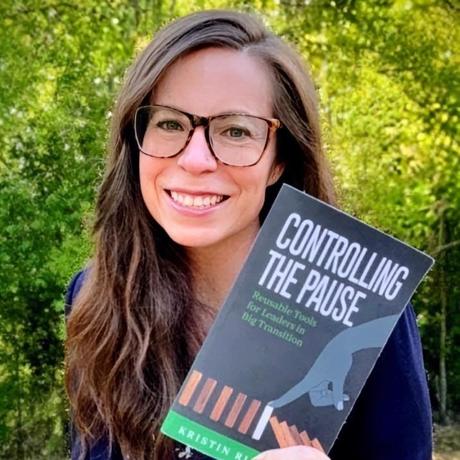
Bear witness. Then decide.
The word votta is Icelandic — meaning to testify, to certify, to bear witness. The framework is built on the idea that leaders can learn to bear witness to their own patterns, assumptions, and decision-making. From that awareness, lead with greater clarity and intention.
Kristin created The Votta Exercise in 2018 and has since used it to support clients ranging from nonprofits and start-ups to executives within Fortune 10 companies. Same six steps. Same posture. Different stakes.
One framework. Use it for the rest of your career.
Pick a Goal
Identify the specific decision, transition, or challenge you want to work through. Specificity matters — vague goals produce vague outcomes.
Separate the Facts from Your View
Distinguish between what’s objectively happening and the story you’re telling yourself about it. This is the move most leaders skip.
Choose a View
Deliberately choose the perspective that serves your goals and values — not the one driven by pressure, habit, or old wounds.
Look Ahead
Project forward from your chosen view. What decisions does this perspective lead to? What actions become obvious?
Look Back
Reflect on past patterns through your new lens. What would you have done differently? What does that tell you about the present?
Check Regularly
Make it a recurring practice. The view that serves you today may not serve you next quarter. Stay current with yourself.
Explore each step.
Open any step to go deeper into how it works and why it matters.
What Is the Votta Exercise?
The Votta Exercise is a six-step framework Kristin created in 2018 to help leaders pause with purpose before making decisions under pressure. The name comes from the Icelandic word votta — to bear witness.
The core idea: most poor decisions don’t come from bad intentions, they come from acting on the story we’re telling ourselves instead of the facts in front of us. The exercise gives you a repeatable way to separate the two, choose a perspective on purpose, and move forward with clarity. It works the same whether you’re a start-up founder or a Fortune 10 executive — only the stakes change.
Step 1 · Pick a Goal
Start by naming the specific decision, transition, or challenge you’re working through. Vague goals like “be a better leader” produce vague outcomes.
A real goal sounds like “decide whether to restructure my team by Q3” or “navigate this acquisition without losing my best people.” The more specific the goal, the more useful every step that follows.
Step 2 · Separate the Facts from Your View
This is the step most leaders skip, and it’s where the exercise earns its keep. Write down what is objectively, verifiably happening — and separately, the story you’re telling yourself about it.
“Revenue dropped 12% last quarter” is a fact. “I’m failing and the board is losing faith in me” is a view. Both feel true in the moment. Only one is. Naming the difference is what frees you to choose your response instead of react to your fear.
Step 3 · Choose a View
Once the facts and the story are separated, you get to choose — deliberately — the perspective that serves your goals and values, rather than the one driven by pressure, habit, or an old wound.
This isn’t spin or forced positivity. It’s recognizing that several true interpretations usually exist, and picking the one that moves you toward who you want to be and where you want to go.
Step 4 · Look Ahead
Project forward from your chosen view. If this is the perspective you’re leading from, what decisions follow naturally? What actions become obvious?
What was paralyzing a moment ago often becomes a clear next step once you’re looking at it from the right vantage point.
Step 5 · Look Back
Now turn the same lens on the past. Reflect on previous patterns and decisions through your new view. What would you have done differently? Where have you made this same mistake before?
The point isn’t regret — it’s pattern recognition. Your history is the best data you have about how you actually operate under pressure.
Step 6 · Check Regularly
The Votta Exercise isn’t a one-time fix; it’s a practice. The view that serves you today may not serve you next quarter as circumstances change.
Build in a recurring check — monthly, quarterly, or at every inflection point — to stay current with yourself and keep your decisions aligned with what actually matters now.
Work through the framework with Kristin.
Bring a real decision. Leave with a clearer view and a concrete next move. First conversation is always free.
Schedule a Conversation